

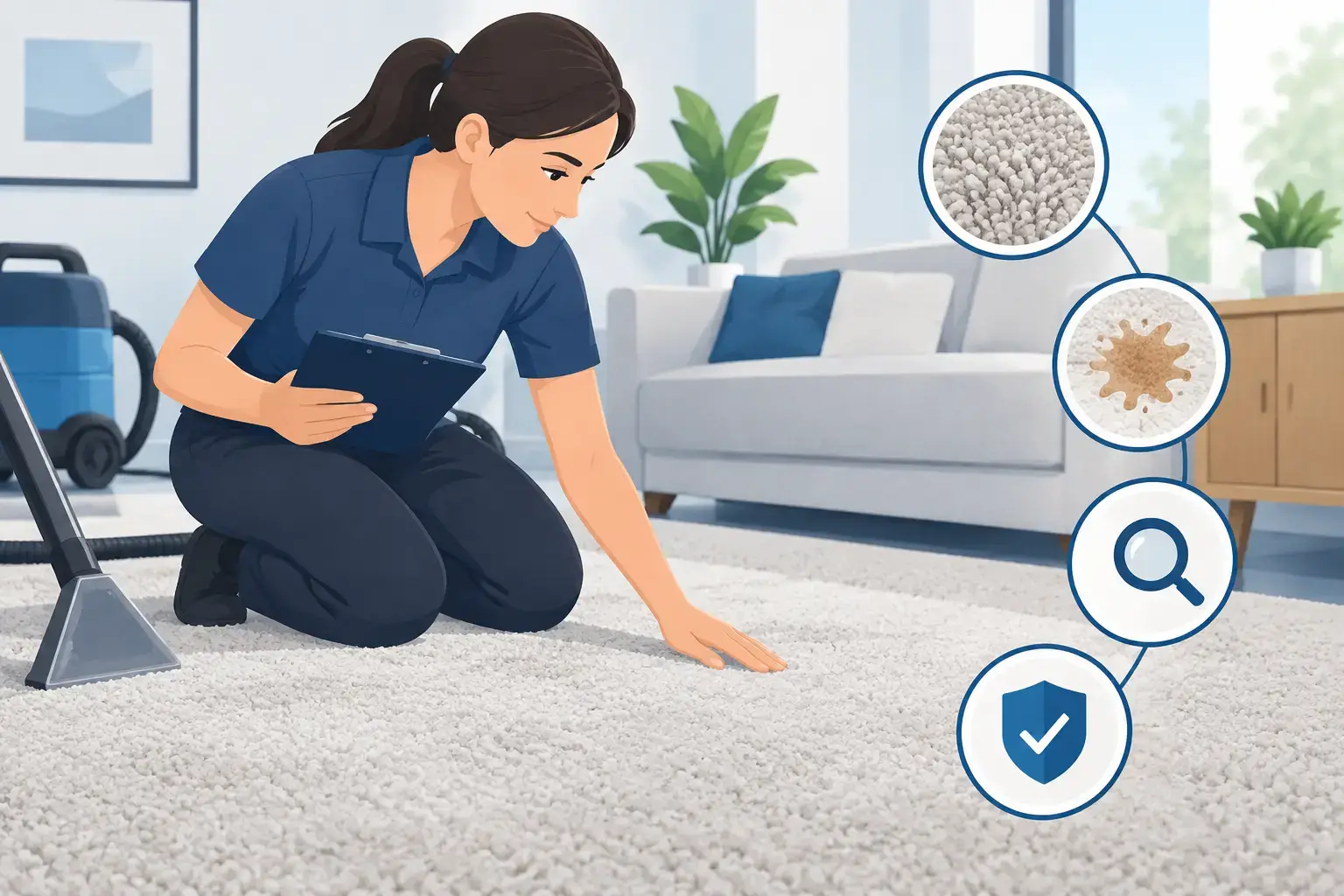
Carpet Cleaning Assessment: What to Check
A carpet can look clean on the surface while holding fine dust, allergens, product residue, odors, and embedded dirt between its fibers. A serious carpet cleaning assessment is therefore not simply a matter of spotting a stain. It determines the nature of the covering, its level of soiling, the risks linked to cleaning, and the safest method for a lasting result.
For a home, a rental building, or a commercial space in Montreal, Laval, the North Shore, or the South Shore, this step avoids unpleasant surprises: rings, discoloration, stains that reappear, drying that takes too long, or damaged fibers. The right diagnosis is the foundation of effective professional upkeep.
Why a Carpet Cleaning Assessment Is Essential
Not all carpets react the same way to water, heat, mechanical agitation, or stain removers. Some synthetic fibers tolerate hot water extraction well, while wool, natural fibers, and certain carpet backings require more precautions. A method that is too aggressive can change the texture, fade the colors, or create a moisture problem.
The assessment also helps distinguish recent dirt from soiling that has been building up for several months or years. High-traffic areas, such as an entrance, a hallway, or the space in front of a couch, often accumulate abrasive particles. Without suitable cleaning, these wear down the fibers with each passage and gradually shorten the life of the carpet.
In a commercial setting, this analysis takes on another dimension. Foot traffic, opening hours, drying constraints, and the image of the premises must be considered before planning the intervention. An effective cleaning must restore the carpet’s appearance without disrupting the business’s activities.
What Is Checked During a Carpet Cleaning Assessment
A methodical inspection begins with identifying the fiber. The technician examines, among other things, the composition of the carpet, the density of the pile, its general condition, and the type of backing. This information guides the choice of temperature, products, and extraction power.
The second step is to analyze the soiling. A coffee, wine, grease, pet urine, mud, or ink stain is not treated with the same stain remover. The time elapsed also matters. An old stain may have penetrated deep into the fibers or already reacted with a poorly suited household product.
The assessment also makes it possible to identify odors. A persistent odor can come from a spill, animals, moisture, or contamination beneath the surface. Treating only the top of the carpet can mask the problem for a few days without eliminating its source. In some cases, a targeted treatment of the backing or the subfloor becomes necessary.
Finally, the condition of the carpet must be assessed honestly. Pronounced wear, areas faded by the sun, burned fibers, or damage caused by chemicals cannot always be corrected by cleaning. A reliable professional clearly explains the difference between recoverable soiling and permanent deterioration.
The Importance of Testing in an Inconspicuous Area
Before applying a product or a method over a large surface, a test in a barely visible area is an essential precaution. It makes it possible to check color stability and how the fiber reacts. This step is particularly useful for delicate carpets, older coverings, or materials with no care label.
A test can also confirm the carpet’s ability to release stains. Some marks respond very well to professional cleaning, while others require several targeted treatments. The goal is not to promise an unrealistic result, but to choose the most effective strategy without compromising the material.
Which Method to Choose Based on the Condition of the Carpet?
Hot water extraction is often preferred for heavily soiled carpets. It helps dislodge deep dirt, fine particles, and residue that build up in the pile. When it is carried out with professional equipment, powerful suction, and well-controlled drying, it offers a deep cleaning without leaving an excessive amount of moisture.
However, this method is not automatically suited to every situation. A carpet that is sensitive to moisture, an environment that must be put back into service quickly, or a fragile covering may call for a low-moisture approach. The right choice depends on the fiber, the extent of the contamination, the available drying time, and the constraints of the site.
Stain and odor treatments are often built into the intervention, but they must not be applied blindly. An alkaline product may be suitable for some greasy soiling, while an enzymatic treatment is more relevant for organic matter. A poor combination of products can set a stain or leave a residue that then attracts dust.
What a Professional Assessment Can Reveal
A home cleaning can temporarily improve the appearance of a carpet, but it rarely reveals what lies beneath the surface. Household machines generally offer limited suction power. If they rinse the fibers poorly, they can leave soap residue that speeds up re-soiling.
A professional assessment can also detect less visible signs: traces of moisture near a wall, stains that wick back up, dust buildup along the edges, delamination of the backing, or localized contamination caused by water damage. These elements directly influence the cleaning plan and the expectations for the result.
For families, this process can contribute to a healthier indoor environment. Rugs and carpets hold part of the dust, dander, pollen, and allergens present in the air. Regular upkeep does not replace good ventilation and vacuuming habits, but it reduces the buildup in textile surfaces.
How to Prepare a Carpet Before the Inspection and Cleaning
Preparation remains simple, but it helps make the service more effective. It is best to clear away small objects, point out known stains, and indicate the places where odors are stronger. If products have already been used on the carpet, the technician should be told. This information can explain a discoloration, a sticky texture, or a stain that has become harder to remove.
Vacuuming remains useful before a deep cleaning, especially in high-traffic areas. It removes dry debris and lets the treatment focus on embedded soil. In a commercial space, planning the intervention outside peak hours also makes drying easier and reduces the risk of foot traffic on a carpet that is still damp.
After cleaning, the drying time varies with the method used, ventilation, ambient humidity, the thickness of the carpet, and the initial level of soiling. It is recommended to limit foot traffic until the fibers are dry to the touch. Good ventilation supports this process and helps preserve an even result.
How Often Should You Have Your Carpet Assessed?
Frequency depends above all on use. A carpet in a little-used bedroom does not require the same upkeep as an entrance rug, a home with pets, or an office receiving clients every day. In an active home, an annual assessment is often a good reference. Households with young children, animals, or people sensitive to allergens can benefit from closer follow-up.
In a commercial setting, the pace must be adjusted to foot traffic and the desired appearance. Some critical areas call for frequent maintenance interventions, while a deep cleaning can be planned periodically. The most economical approach is not always to wait until the carpet looks very dirty: a preventive intervention helps protect the fibers and avoid premature replacement.
Since 1995, Nettoyage Imperial has relied on precise inspection, suitable equipment, and safe methods to recommend a treatment consistent with each type of carpet. A well-conducted assessment above all offers a clear decision: clean, treat locally, maintain more often, or plan a solution for damage that goes beyond cleaning.
Before traces of wear, odors, or set-in stains become hard to correct, having the carpet examined makes it possible to act at the right time and preserve the comfort of your spaces for longer.
What does a carpet cleaning assessment include?
The technician identifies the fiber, the soiling and stains, any odors, and the overall condition of the carpet, then chooses the safest method for a lasting result.
Why test a hidden area before cleaning a carpet?
It checks color stability and how the fiber reacts before treating a large surface. It is especially useful for delicate carpets, older coverings, or materials with no care label.
Can professional cleaning remove every carpet stain?
Not always. Some marks respond very well, while others need several targeted treatments, and fading, burned fibers, or chemical damage cannot always be corrected. A reliable professional explains the difference.
How long does a carpet take to dry after cleaning?
It varies with the method, ventilation, ambient humidity, the thickness of the carpet, and the initial soiling. Limit foot traffic until the fibers are dry to the touch.
How often should a carpet be professionally assessed?
It depends on use. In an active home, an annual assessment is often a good reference, with closer follow-up for young children, pets, or allergy-sensitive people.
Key Takeaways
- A carpet can look clean while holding dust, allergens, residue, odors, and embedded dirt, so an assessment must go beyond spotting a stain.
- The technician identifies the fiber, analyzes the soiling and the time elapsed, checks for odors, and honestly assesses the carpet’s condition.
- A test in an inconspicuous area checks color stability and fiber reaction, especially for delicate or older carpets and those with no care label.
- The method depends on the fiber, the extent of contamination, drying time, and site constraints: hot water extraction for heavy soiling, a low-moisture approach for fragile or urgent cases.
- Wear, sun fading, burned fibers, and chemical damage cannot always be corrected, and a reliable professional explains what is recoverable.
- Prepare by clearing small objects, pointing out stains and odors, and mentioning products already used, and review the carpet about once a year in an active home.