

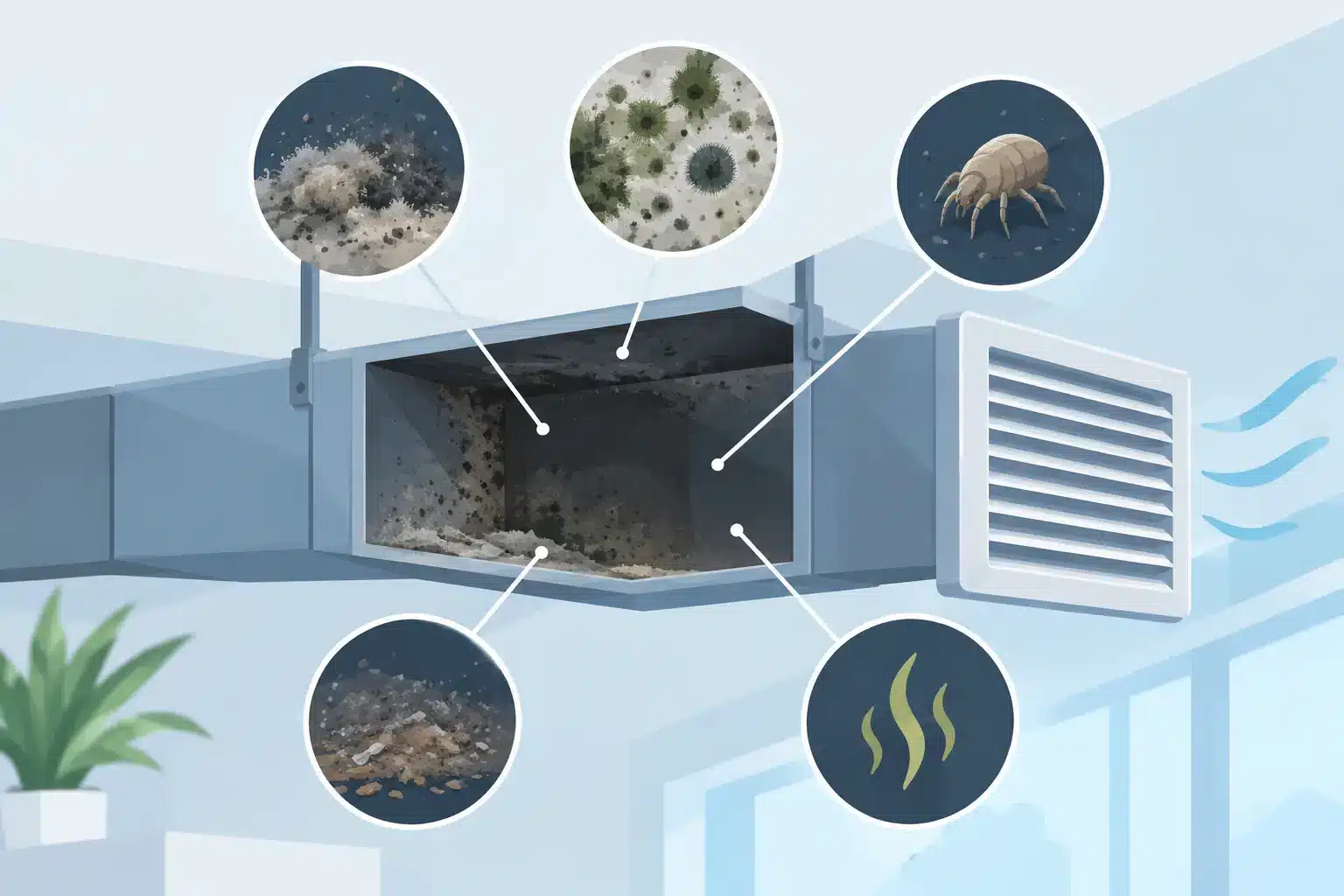
Five Signs of Duct Contamination
An odor that returns as soon as the heating starts, dust that reappears a few hours after cleaning, or visibly dirty grilles are not just minor irritants. They are sometimes the five signs of duct contamination that are easiest to recognize. In a house, a rental building, or a business, the ventilation system circulates air continuously. When it accumulates dust, fibers, allergens, or moisture, it can also redistribute these contaminants from one room to another.
In Montreal, Laval, the North Shore, and the South Shore, long heating periods, renovation work, and frequent use of ventilation systems increase the risk of buildup. Here is how to interpret the observable signals, without jumping to conclusions, and when a professional intervention becomes the most prudent solution.
Five Signs of Duct Contamination to Watch For
1. Unusually Heavy Dust in the Rooms
You have just dusted the furniture and a fine gray layer quickly returns? The phenomenon can have several causes, notably rugs, textiles, pets, or poorly filtered air intakes. However, when dust appears mainly near the supply vents or increases as soon as the system runs, the ducts deserve a check.
Ducts can hold particles for years: household dust, fabric fibers, pet hair, renovation residue, and pollen. Some of these deposits stick to the walls, but vibrations, changes in airflow, and repeated start-ups can put light particles back into circulation. A superficial cleaning of the grilles then addresses only a visible portion of the problem.
However, you must distinguish a contaminated network from a simple filtration problem. A filter of the wrong size, one that is too loaded, or one that is poorly installed lets more dust through. During an inspection, the condition of the filter, the grilles, and the accessible sections of the network should be assessed together.
2. Persistent Odors When the System Starts
A stuffy, dusty-hot, musty, or cooking smell that spreads through several rooms should never be dismissed. If it returns every time the ventilation, the furnace, or the air exchanger starts, it may come from the ducts, the fan, the coil, or a source of moisture in the system.
Odors do not automatically prove the presence of mold. Greasy residue, pet hair, damp materials, or organic debris can produce the same effect. However, a sustained musty odor, particularly after an infiltration, water damage, or a long period of vacancy, justifies a more thorough assessment.
In businesses, odors can also settle in more quickly when the network serves high-traffic areas, break rooms, or spaces where people eat. The right reflex is to look for the source rather than masking the problem with an air freshener.
3. Dark Marks or Deposits Around the Air Vents
Black, gray, or brownish marks around the diffusers often draw attention. They can be caused by particle-laden air hitting the walls or ceiling near the outlets. They can also reveal a dirty grille, unbalanced airflow, or joints that let in dust from unconditioned spaces.
These marks cannot, on their own, diagnose mold. A reliable identification requires an inspection of the surfaces and the moisture context. It is nonetheless worth taking them seriously, especially if they come with odors, condensation, or spreading stains.
Avoid vigorously brushing the inside of the ducts with a household tool. This method can move contaminants without extracting them and damage some components. A professional cleaning aims instead to dislodge deposits with suitable equipment, then capture them under controlled pressure.
4. Symptoms That Ease Away From the Building
Throat irritation, itchy eyes, a stuffy nose, a mild cough, or worsening allergies: these symptoms have many causes and should not be automatically attributed to the ducts. However, if several occupants feel them mainly indoors and notice an improvement when they leave the premises, the air quality deserves particular attention.
Children, seniors, people with asthma, and those with seasonal allergies can be more sensitive to airborne particles. A dirty ventilation network is not necessarily the only cause of their discomfort, but it can help maintain a less healthy environment, especially when filters are neglected or indoor humidity is too high.
Before intervening, it is useful to note when the symptoms appear, which rooms are affected, and how the system is operating. This information helps distinguish a ventilation-related source from other factors such as a damp rug, a pet, scented products, or a localized mold problem.
5. Reduced Airflow or a Noisier System
Ventilation that blows less strongly than before, rooms that are hard to heat or cool, and increased noise can indicate an obstruction in the network. Dust buildup does not explain every airflow problem: a closed damper, a clogged filter, a failing fan, or a damaged duct can also be the cause.
However, when a return air duct or a heavily used section is clogged, the unit has to work harder to circulate the air. This can affect comfort and, depending on the overall condition of the installation, needlessly increase energy consumption. Cleaning does not replace a mechanical repair, but it can restore better operating conditions when deposits are truly the cause.
What Really Contaminates a Ventilation Network
Contamination is not limited to visible dust. In a residential or commercial network, you may find fibers, pollen, pet dander, renovation residue, insects, greasy particles, and, in some cases, traces linked to moisture. The nature of the deposits depends on how the premises are used, how well the filters are maintained, the age of the building, and the presence of animals or recent work.
Renovations are a frequent factor. Even when an area has been isolated with tarps, fine particles of plaster, wood, or cement can reach the return air ducts. After major work, an inspection of the ducts is generally more relevant than a cleaning done only according to a calendar.
Moisture calls for particular vigilance. A well-maintained duct can become contaminated again if an infiltration, excessive condensation, or a drainage problem persists. In that case, cleaning without correcting the source of moisture gives an incomplete result.
When Should You Schedule a Professional Cleaning?
There is no universal frequency that applies to every building. A home occupied by two people with no pets or renovations does not have the same needs as a family residence with a dog, several rugs, and a heavily used heating system. Managers of buildings and commercial spaces must also consider foot traffic, the activities carried out, and the preventive maintenance already in place.
A professional cleaning is particularly indicated after renovations, water damage, an episode of persistent odors, an infestation, a long vacancy, or when several signs are observed at the same time. It is also sensible when a visual check reveals significant deposits at the grilles and in the accessible ducts.
A serious intervention is not just a matter of running a vacuum into an air vent. It should include an assessment of the network, protection of the work areas, the use of appropriate dislodging tools, and effective extraction of the contaminants. Related components, such as the grilles, the return air ducts, and certain ventilation elements, must be considered according to the configuration of the system.
Nettoyage Imperial favors this methodical approach: diagnose the real condition of the network, use professional equipment, and carry out the work with procedures that are safe for occupants and installations.
Preserving the Results Between Two Interventions
A filter replaced at the right time remains your first line of defense. Check its size, its installation direction, and the replacement interval recommended for your unit. A high-performance filter can be useful, but it must be compatible with the system: a model that is too restrictive can reduce airflow if the equipment is not designed for it.
Keep the grilles clear, vacuum them gently when needed, and avoid blocking the return air ducts with furniture. After construction work, clean the surfaces carefully before putting the ventilation back into operation at full capacity. Finally, monitor indoor humidity and have leaks or unusual condensation corrected quickly.
A clean duct is not noticed through a visual spectacle. It shows instead through more neutral air, better-maintained grilles, and a system that can fulfill its role without needlessly redistributing accumulated dust.
How do you know if your air ducts are contaminated?
Watch for unusually heavy dust in the rooms, persistent odors when the system starts, dark marks or deposits around the air vents, symptoms that ease away from the building, and reduced airflow or a noisier system.
Why does my house smell when the heating starts?
If an odor returns every time the ventilation, furnace, or air exchanger starts, it may come from the ducts, the fan, the coil, or a source of moisture in the system. Odors do not automatically prove mold, since greasy residue, pet hair, or damp materials can cause the same effect.
Do dark marks around air vents mean mold?
Not on their own. They can come from particle-laden air, a dirty grille, unbalanced airflow, or joints that let in dust. A reliable identification requires an inspection, and the marks deserve attention if they come with odors, condensation, or spreading stains.
Can dirty air ducts affect your health?
Symptoms have many causes, so they should not be automatically blamed on the ducts. A dirty network is not necessarily the only cause, but it can help maintain a less healthy environment, especially when filters are neglected or indoor humidity is too high.
When should you schedule a professional duct cleaning?
After renovations, water damage, persistent odors, an infestation, a long vacancy, or when several signs appear at the same time. It is also sensible when a visual check reveals significant deposits at the grilles and in the accessible ducts.
Key Takeaways
- The five signs to watch for are unusually heavy dust, persistent odors at startup, dark marks around the air vents, symptoms that ease away from the building, and reduced airflow or a noisier system.
- Each sign has other possible causes, such as a poor filter, a closed damper, or a damaged duct, so an inspection should assess the filter, grilles, and accessible sections together.
- Odors and dark marks do not prove mold on their own, but a sustained musty odor after water damage or a long vacancy justifies a more thorough assessment.
- Contamination includes fibers, pollen, pet dander, renovation residue, insects, greasy particles, and moisture-related traces, and persistent moisture must be corrected for cleaning to be complete.
- Professional cleaning is particularly indicated after renovations, water damage, persistent odors, an infestation, a long vacancy, or several signs at once, and it should include assessment, protection, dislodging tools, and effective extraction.
- Between interventions, replace a compatible filter on time, keep grilles and return air ducts clear, clean surfaces after construction work, and fix leaks or unusual condensation quickly.