

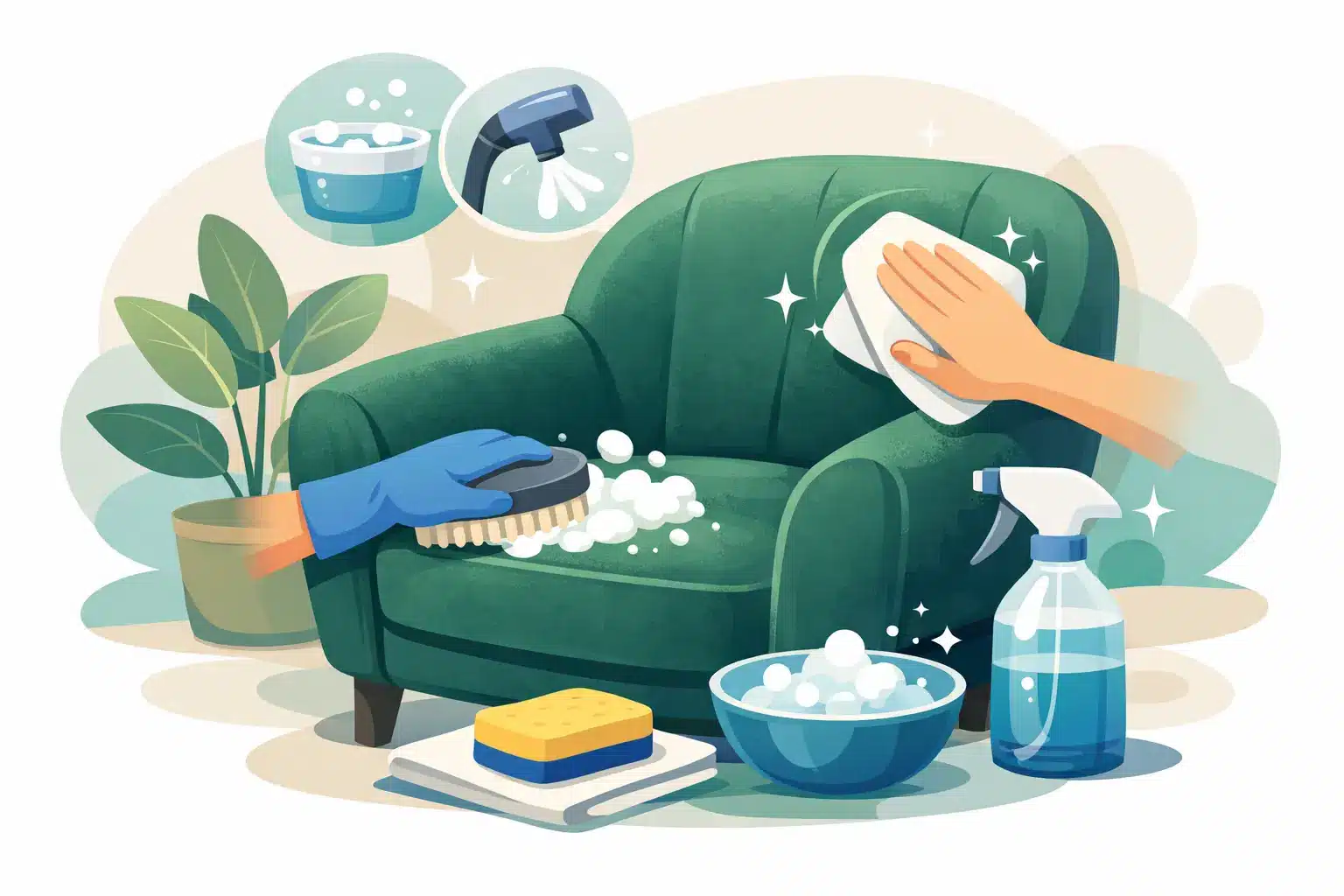
A velvet armchair gives a room instant character but it also shows fingerprints, dust, pet hair, and stains quickly. The best methods for cleaning a velvet armchair don’t rely on a miracle product: they start with identifying the fabric, applying a measured treatment, and controlling the drying process. A gesture that’s too wet or too aggressive can flatten the fibers, create a ring mark, or change the look of the upholstery.
Velvet can be made from cotton, polyester, viscose, silk, or a blend of fibers. Two armchairs that look identical can react very differently to water and stain removers. The right method is the one that removes dirt without compromising the color, texture, or structure of the fabric.
Identify the Velvet Before Any Cleaning
Before cleaning your armchair, check the care label, usually located under the seat or under a cushion. Care codes give a valuable indication of which product to use. A W code usually tolerates water-based cleaning, an S code calls for a fabric-appropriate solvent, while a WS code allows both approaches. With an X code, vacuuming or professional brushing are the safest options.
Without a label, it’s best to treat the armchair as delicate. Natural velvets and some viscose velvets mark easily on contact with water. A method that works fine on a polyester sofa can leave darker or rougher patches on a delicate velvet.
Always test a hidden area first — behind the backrest or under a cushion, for example. Apply a very small amount of the chosen product, dab without rubbing, then let it dry completely. Check the color, texture, and direction of the fibers before moving to a visible area.
The Best Methods for Cleaning a Velvet Armchair
Removing Dust and Debris Without Crushing the Fibers
Regular upkeep is the first line of defense against buildup. Vacuum once a week using a soft furniture brush attachment, set at moderate power. Work in the direction of the velvet’s nap, with slow passes. Vacuuming too aggressively or using a rigid attachment can pull the fibers and leave a visible mark.
For hair and small surface particles, a soft fabric brush or a low-tack lint roller is often enough. Avoid very sticky tape rollers, especially on older or worn velvet — they can pull out weakened fibers and dull the fabric locally.
Acting Quickly on a Fresh Stain
A fresh stain is much easier to remove than one that has dried. Start by blotting the liquid with a clean, dry, white, lint-free cloth. Press gently, without circular motions — rubbing pushes the liquid deeper into the padding and spreads the stain beyond its original area. The same principle applies to other upholstered furniture: blotting stains instead of rubbing helps limit their spread.
If residue remains, use only a product compatible with the care code. On velvet that tolerates water, a barely damp cloth with a very diluted, pH-neutral textile cleaner may work. The cloth should be damp, never soaked. Dab from the outside toward the center, then remove excess moisture with a second dry cloth.
Vinegar, concentrated dish soap, moistened baking soda, and all-purpose stain removers are often recommended as home remedies. Their effectiveness varies, but the risk is real: sticky residue, discoloration, ring marks, or hardened fibers. On a valuable piece of furniture, the money saved doesn’t always offset permanent damage.
Drying Evenly to Avoid Ring Marks
Drying matters just as much as stain removal. A cleaned area that’s too wet dries unevenly and can form a darker outline. After blotting the stain, let air circulate in the room. Open a window if conditions allow, or use a fan pointed at the area from a distance.
Don’t bring a very hot hair dryer close to the armchair, and don’t place the fabric directly in front of a heat source. Excessive heat can set a remaining stain, weaken certain synthetic fibers, and change the texture of the velvet. Wait until the fabric is completely dry before judging the result.
Once the armchair is dry, gently brush the area with a soft brush, always in the direction of the nap. This step helps the fibers regain a more uniform appearance. If the velvet still looks marked, don’t apply more product repeatedly — first determine whether the mark comes from the stain itself, a residue, or a change in fiber direction.
Treating Odors With Restraint
Odors from pets, smoke, humidity, or food don’t always disappear with a fabric spray. These products only mask the problem temporarily and can add residue to the upholstery. Thorough vacuuming and good ventilation help with light odors.
When an odor persists, it may come from the foam, the cushions, or a liquid that has soaked deep into the armchair. In that case, surface treatment is rarely enough. Professional cleaning with a method suited to the fabric can target the source of the odor without oversaturating the padding.
The Mistakes That Damage Velvet Most Often
Using a steam cleaner is one of the most common mistakes. Steam can be fine on some sturdy upholstery, but it’s not a universal solution for velvet. Depending on its composition, steam can leave water marks, flatten the nap, or weaken the glues used in the armchair’s construction.
You should also avoid pouring product directly onto the fabric. This habit concentrates moisture in one spot and makes it hard to control the amount used. Instead, apply the product to the cloth, in a minimal quantity. Stiff brushes, abrasive sponges, and fast back-and-forth motions are just as risky, since they alter the direction of the fibers.
Finally, don’t treat a small stain in isolation if the armchair as a whole looks dull or dusty. After spot-cleaning, the clean area can stand out more than the rest of the seat. In that situation, cleaning the entire armchair evenly usually gives a more discreet and longer-lasting result.
When to Call in a Professional
Some situations call for more than careful home care: an old stain, red wine, urine, grease, ink, an embedded odor, or ring marks left after a cleaning attempt. The same goes for viscose velvet armchairs, antique pieces, unlabeled fabrics, and high-end furniture.
A qualified technician starts by identifying the type of upholstery, the nature of the soiling, and the level of moisture the fabric can handle. They then choose a controlled cleaning method, with appropriate products and reduced drying time. The goal isn’t just to remove a visible stain, but to limit residue, preserve the fibers, and improve the hygiene of the furniture.
At Nettoyage Impérial, this evaluation is part of a methodical approach: each armchair is treated according to its actual material and condition, rather than with an identical procedure for every fabric. This is especially useful in households with children, pets, or people sensitive to dust and allergens.
A well-maintained velvet armchair doesn’t need aggressive cleaning. Vacuum it regularly, use minimal moisture when treating marks, and have complex stains assessed before they set in. This care preserves its texture, color, and elegance for much longer.
Can you use water to clean a velvet armchair?
It depends on the care code. A W or WS code generally tolerates water-based cleaning with a barely damp cloth, while an S or X code requires a solvent or professional dry treatment instead.
Can you steam clean a velvet armchair?
Not always. Steam can leave water marks, flatten the nap, or weaken the glues in the armchair’s construction, so it isn’t a safe default for velvet.
How do you get a stain out of velvet without leaving a mark?
Blot the liquid immediately with a dry cloth, avoid rubbing, then use only a small amount of a product compatible with the care code — dabbing from the outside toward the center and drying evenly.
Why does my velvet armchair have a ring mark after cleaning?
Ring marks usually form when a spot is cleaned too wet and dries unevenly. Controlling moisture and allowing even air circulation while drying helps prevent this.
How often should you clean a velvet armchair?
Vacuum weekly with a soft brush attachment to prevent buildup and treat stains as soon as they happen rather than letting them set.
Key Takeaways
- Identify the fabric care code (W, S, WS, or X) before choosing a cleaning method.
- Always test any product on a hidden area first.
- Vacuum weekly in the direction of the nap; avoid rigid attachments and sticky tape rollers.
- Blot fresh stains immediately, never rub and use minimal, code-appropriate product.
- Dry evenly with airflow, not heat, to avoid ring marks and fiber damage.
- Avoid steam cleaners, pouring product directly on fabric, and abrasive tools.
- Clean the whole armchair rather than isolating a single stain to keep the look even.
- Call a professional for old stains, wine, urine, grease, ink, embedded odors, viscose velvet, antiques, or unlabeled fabric.