

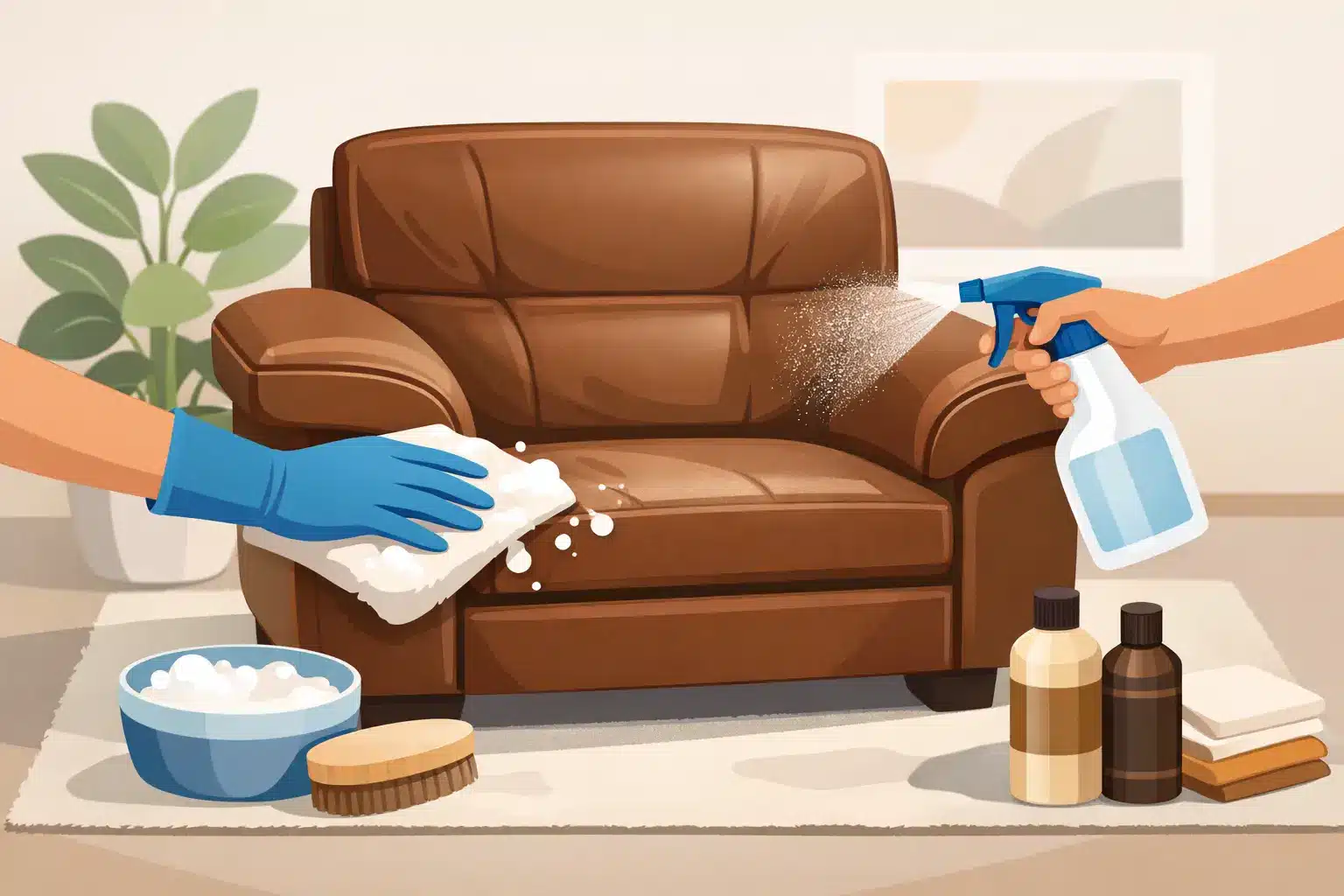
A leather armchair doesn’t respond well to good intentions applied the wrong way. This leather armchair cleaning guide walks through a careful method for removing dust, treating a stain, and preserving the suppleness of the material without changing its color or weakening its finish. The right approach always depends on the type of leather, how old the stain is, and any products already used in the armchair.
Leather is a natural or treated material that can dry out, stiffen, discolor, or become sticky when it’s over-wetted or cleaned with the wrong product. Light, regular upkeep is therefore more effective than one aggressive deep clean carried out once a year.
Identify the Leather Before Cleaning
Before doing anything, look for the manufacturer’s care label. It may specify the type of leather, the recommended products, or the methods to avoid. This information is especially useful for high-end armchairs, older seating, and heavily used office furniture.
Pigmented leather is the most common in family homes. It has a protective finish coat and generally resists small stains and rubbing better. Aniline leather, often softer and more natural to the touch, absorbs liquids more readily and requires gentle handling. Nubuck and suede, recognizable by their velvety texture, cannot be cleaned like smooth leather: water and greasy products can leave lasting rings on them.
When in doubt, never test a product in the center of the seat. Try it on a discreet area, under a cushion or on the back of the armchair. Apply a minimal amount, let it dry completely, then check the color, the texture, and whether any mark is left.
Leather Armchair Cleaning Guide: The Regular Method
Monthly upkeeping is often enough to keep an armchair clean in a normally used home. In a household with children, pets, or forced-air heating, dust and residue can build faster in the seams, folds, and between the cushions.
Start by gently vacuuming the armchair with a soft brush attachment. Reduce the vacuum power and avoid rubbing the piping, edges, or areas that are already weakened. This step removes the abrasive dust that gradually dulls the leather’s finish.
Next, go over the surface with a clean microfiber cloth, lightly dampened with lukewarm water. The cloth should be wrung out as much as possible: it should never drip or leave the leather visibly wet. Work in small sections without pressing hard, then dry immediately with a second, soft, dry microfiber cloth.
If the armchair shows a grayish film, handprints, or light soiling, use a cleaner specifically made for that type of leather. Apply the product to the cloth, not directly onto the armchair. Clean with light movements, without soaking the surface, and respect the drying time recommended by the product’s manufacturer.
Nourishing treatment isn’t automatic. A suitable conditioner can help when the leather feels dry, rough, or less supple, but too much cream can clog the finish and attract dust. On some modern pigmented leathers, a protector formulated for the surface is more appropriate than a greasy balm. Here again, the manufacturer’s recommendations come first.
Responding Correctly Based on the Stain
The deciding factor is how quickly you act. A fresh stain is much easier to treat than soiling that has penetrated the pores or been spread by repeated rubbing. For more guidance on dealing with spills and marks, see our guide to cleaning a leather couch. Always blot instead of rubbing: rubbing enlarges the mark, wears down the finish, and can push the liquid further in.
For a spilled liquid, absorb it immediately with a clean, dry white cloth. Press gently without circular motions. Then let it air dry, away from a radiator, hair dryer, or window in direct sunlight.
A mark from food, sugary drink, or greasy dirt calls for more restraint. After removing the excess with a non-abrasive scraper or a dry cloth, clean only that area with a dedicated leather product, after testing it first. Older grease stains, makeup, ink, and color transfer from dark denim are often more complex. Repeated attempts with household products can turn a localized mark into permanent discoloration.
Odors are another special case. If the armchair smells of smoke, pets, or dampness, masking the smell with a fragrance doesn’t treat its source. It’s necessary to determine whether the odor sits on the surface of the leather, in the seams, in the foam, or in the upholstered structure. A professional treatment may then be needed, especially after water damage or significant contamination.
Products and Actions to Avoid
Several solutions popular online are too risky for a leather armchair. Vinegar, rubbing alcohol, disinfecting wipes, bleach, and multi-purpose cleaners can strip dyes, damage the protective finish, or dry out the material. Even when they seem to work in the moment, the damage can show weeks later as cracking, dull patches, or discoloration.
Also avoid Marseille soap, cooking oils, shoe products not designed for furniture, and homemade mixtures based on essential oils. They frequently leave a greasy residue, change the feel of the armchair, and make future cleanings harder. A “natural” product isn’t necessarily compatible with treated leather.
Steam should also be used with caution. Excessive heat can damage adhesives, pigments, and the surface finish. It’s particularly discouraged for older leather, aniline leather, nubuck, and areas that already show cracking. An armchair should never be saturated with water, regardless of the method used.
Preserving the Armchair Between Cleanings
Where the furniture sits plays a direct role in how it ages. UV rays fade leather, and direct heating speeds drying. Position the armchair at a reasonable distance from a radiator, a hot-air vent, or a heavily exposed bay window. Closing a curtain during the brightest hours can help limit fading.
Reversible cushions should be flipped regularly when their design allows it. This habit spreads out wear and reduces deep creasing on the seat. For households with pets, a washable throw can protect favorite spots without stopping daily use of the armchair.
Don’t let a stain wait for the next big cleaning session. Quick absorption, followed by gentle cleaning if needed, protects the upholstery better than a buildup of intensive treatments. Keeping two clean microfiber cloths and a suitable leather product nearby is usually enough to handle small incidents.
When to Trust the Armchair to a Professional
Professional upholstery cleaning can be worthwhile when the leather is heavily soiled, color has transferred, an odor persists, or a stain resists a first, careful attempt at cleaning. This is also recommended for older furniture, light-colored leather, aniline leather, nubuck, and armchairs whose finish shows signs of fragility. Diagnosing the material should always come before choosing a method: not every upholstered surface tolerates the same cleaning approach.
In Montreal, Laval, the North Shore, or the South Shore, Nettoyage Impérial can assess the overall condition of the furniture and guide the client toward a suitable solution, without compromising the upholstery. A professional intervention aims both to remove soiling and to protect the material and extend the life of the piece.
A well-maintained leather armchair keeps its value, comfort, and appearance for many years. The most useful rule stays simple: use little product, little water, and stop as soon as the leather starts behaving unusually. This caution keeps the cleaning itself from becoming the cause of the problem.
How often should I clean a leather armchair?
A light monthly routine; vacuuming with a soft brush and wiping with a barely damp microfiber cloth — is usually enough for a normally used home. Households with children, pets, or forced-air heating may need to dust more often since residue builds faster in seams and folds.
Can I use vinegar, alcohol, or disinfecting wipes to clean leather?
No. These products can strip dyes, damage the protective finish, and dry out the leather. The damage isn’t always immediate; cracking, dull patches, or discoloration can appear weeks after use.
How do I remove a grease or food stain from a leather armchair?
Remove the excess with a non-abrasive scraper or dry cloth, then clean only the affected area with a product made for that leather type, after testing it on a hidden spot first. Repeated cleaning attempts with household products can turn a small mark into permanent discoloration.
Is steam cleaning safe for leather furniture?
It’s risky. Excessive heat from steam can damage adhesives, pigments, and the surface finish, and it’s especially discouraged on older leather, aniline leather, nubuck, or any area that already shows cracking.
How can I stop my leather armchair from drying out or cracking?
Keep it away from radiators, hot-air vents, and direct sunlight, use a suitable conditioner or protector only when the leather feels dry or rough, and avoid oil-based or homemade products that leave a residue and change the leather texture over time.
Key Takeaways
- Identify the leather type (pigmented, aniline, nubuck/suede) and check the manufacturer label before cleaning; each type reacts differently to water and products.
- Always test a product on a hidden area first and let it dry fully before judging the result.
- A monthly routine. soft-brush vacuuming, a barely damp microfiber wipe, and immediate drying, is usually enough for normal households.
- Conditioner or protector should only be used when needed and matched to the leather type; over-conditioning can clog the finish and attract dust.
- Blot stains immediately instead of rubbing, and treat grease, food, or ink stains with a dedicated leather product only after a patch test.
- Avoid vinegar, alcohol, bleach, disinfecting wipes, soap, cooking oils, and steam, they can strip color, dry out the leather, or damage the finish, sometimes only becoming visible weeks later.
- Keep the armchair away from direct sun and heat sources, flip reversible cushions regularly, and call a professional for heavy soiling, persistent odors, color transfer, or fragile/older leather.