

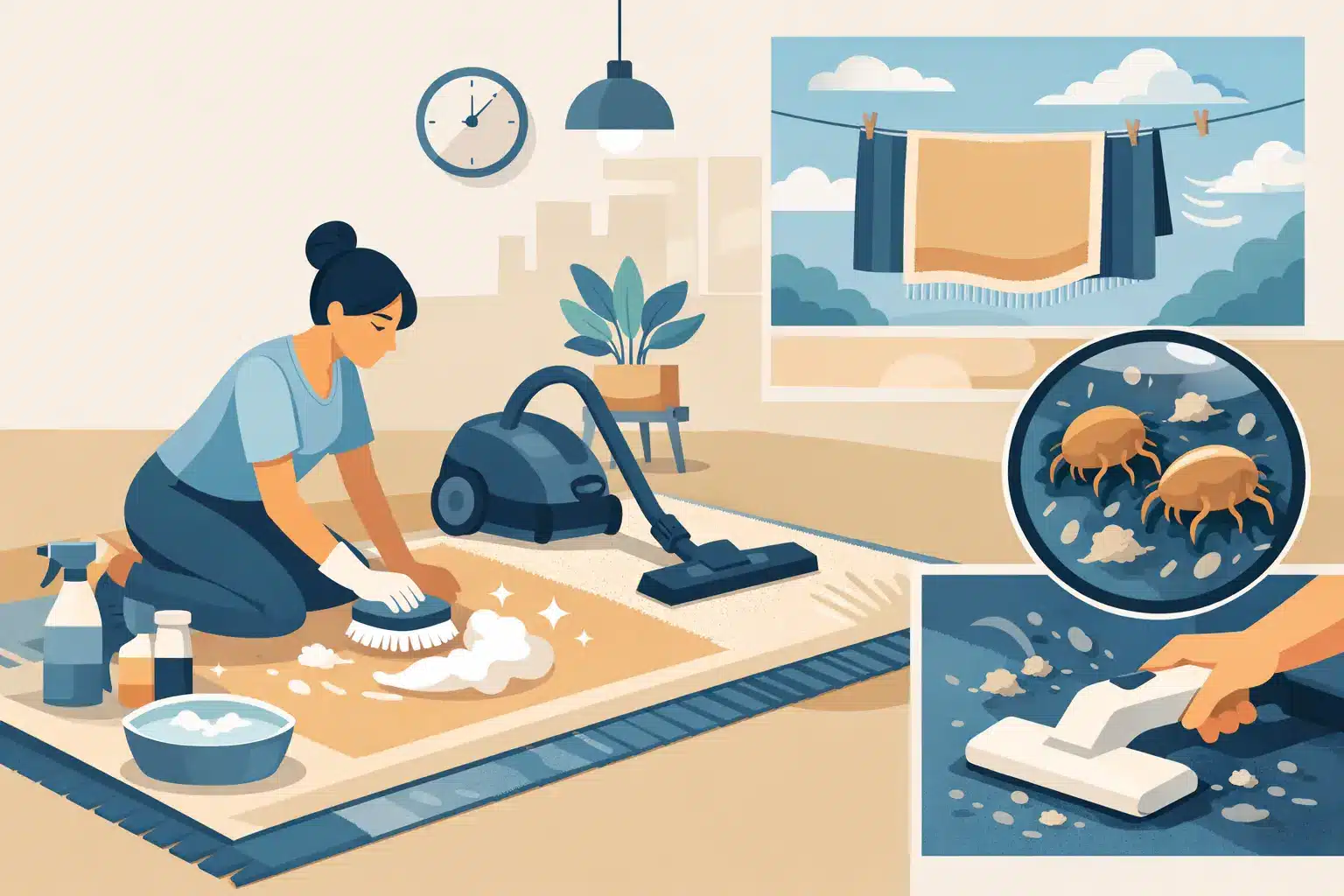
A carpet can look clean while it’s already holding onto fine dust, allergens, pet hair, sand, and residue tracked in from outside. Asking how often to clean a carpet isn’t just a question of appearance; it’s a decision that affects indoor air quality, household hygiene, and how long the fibers last.
The right frequency depends mainly on how the carpet is actually used. A carpet in a rarely used living room doesn’t have the same needs as an entryway rug, a carpet under a family dining table, or flooring in an office open to the public. The goal is to intervene before dirt becomes embedded and prematurely wears the textile.
How Often to Clean a Carpet Based on Use
For most homes, a deep professional cleaning every 12 to 18 months is a reasonable baseline. This pace suits a household with no pets, no young children, and a moderate level of foot traffic. Between cleanings, careful vacuuming once or twice a week limits the buildup of dry particles.
High-traffic areas need more frequent care. In heavily used areas, the frequency should increase. Entryway carpets, hallways, staircases, family living rooms, and dining rooms take on more abrasive dust and greasy residue. Professional cleaning every 6 to 12 months is then preferable. Waiting until the carpet looks visibly dull or starts to smell often means letting the fibers get dirtier at a deeper level.
The following situations also call for more frequent care:
- A dog or cat in the home, especially during shedding season
- Young children who regularly play on the floor
- Allergies, asthma, or sensitivity to dust
- Shoes worn indoors or direct access from outside
- Smokers, persistent odors, or a one-off spill or accident
- Business activity with heavy foot traffic, client visits, or food service
In these cases, cleaning every 6 months can be worthwhile, particularly for living-room carpets and textiles installed in living spaces. For a business, rental building, or office, the right pace depends on the flow of people, the season, and the space’s hygiene requirements. Some commercial entryways need several cleanings a year.
Visible Wear Isn’t the Only Indicator
The dirt you can see is only part of the problem. Sand grains, mineral dust, and particles tracked in on shoes to settle at the base of the fibers. With repeated foot traffic, they act like an abrasive. The carpet can then lose its shine, flatten in high-traffic zones, and wear out faster.
Pet hair, dander, pollen, and dust mites can also build up within the fibers. Regular vacuuming is essential, but it doesn’t always remove greasy residue, sticky deposits, or contaminants lodged deep in the pile. That’s precisely the limit of at-home maintenance alone.
An unusual odor is another signal worth taking seriously. It can come from an old stain, a pet accident, excess moisture, or residue from products that weren’t properly rinsed out. Masking the smell with air freshener doesn’t address the source. Assessing the fiber type, the stain, and the moisture present makes it possible to choose a suitable method without damaging the carpet.
Signs You Should Act Before the Scheduled Date
Cleaning doesn’t always have to wait for the date marked on the calendar. If the colors look dull, if the carpet feels sticky underfoot, if high-traffic areas turn grayish, or if stains reappear after drying, it’s time for cleaning.
The same applies after a water incident, a leak, a spilled drink, or an animal accident. The faster the treatment, the better the chances of removing the stain and the odor. When there’s significant moisture involved, it’s also important to avoid soaking the carpet with homemade products. Poorly managed moisture can encourage mold growth in the backing or underneath the flooring.
Vacuum Often, Deep Clean at the Right Time
Vacuuming remains the first protective step. In rooms used daily, one to two passes a week is recommended. In an entryway or a home with pets, two to three passes may be needed. Vacuuming should be done slowly, in several directions, to loosen particles trapped between the fibers.
A long-pile carpet requires extra precautions. A brush that’s too aggressive can pull at the fibers or damage a fringe. Antique carpets, and those made of wool, silk, viscose, or other natural fibers, shouldn’t be treated the same way as synthetic broadloom. Delicate area rugs may require specialised professional cleaning.
Deep cleaning, meanwhile, targets the dirt that vacuuming can’t remove. Depending on the material and condition of the carpet, it can include targeted pre-treatment, controlled extraction, low-moisture cleaning, or a specific in-shop method. The best technique isn’t necessarily the one that uses the most water; it’s the one that respects the fibers, removes residue, and allows for controlled drying.
Mistakes That Shorten a Carpet’s Lifespan
Treating a stain right away is useful, as long as it’s done gently. Scrubbing a stain hard spreads it out and can break the fibers. It’s better to blot with a clean white cloth, working from the outside toward the center, without soaking the area. Using colored, highly alkaline, or unsuitable products can discolor the carpet and leave a residue that attracts even more dirt afterward.
Renting a machine can seem like an economical option for occasional cleaning, but it has its limits. A machine that isn’t powerful enough can leave water and detergent behind in the textile. Conversely, a poorly dosed product can cause the carpet to get dirty again quickly. Delicate carpets, old stains, and pet odors often need more than a standard pass.
It’s also important to avoid putting furniture back on a carpet that’s still damp too soon. The weight can leave marks in the fibers, and furniture legs can transfer dye or create rings. Good ventilation and respecting the drying time are essential parts of successful carpet care.
Adapting the Frequency to the Changing Seasons
In Montreal, Laval, the North Shore, and the South Shore, winter and early spring are especially hard on carpets. Road salt, melting snow, sand, and mud build up in entryways and hallways. Cleaning after the winter season helps remove these deposits before they damage the fibers or leave whitish marks.
Fall is also a good time to plan a cleaning, especially before windows stay closed more time is spent indoors. For households sensitive to allergies, cleaning textiles after pollen season can help maintain a more comfortable environment.
This seasonal logic doesn’t replace day-to-day observation. A carpet exposed to boots, a wet pet, or frequent family meals may need attention before spring. On the other hand, a rarely used guest room can wait longer, if it’s vacuumed and protected from moisture.
When Should You Bring a Professional?
Calling in a professional is especially worthwhile for high-value carpets, delicate fibers, old stains, persistent odors, and damage related to pets or water. A skilled technician identifies the material, checks color stability, and chooses a process that limits the risk of shrinkage, discoloration, or over-saturation with moisture.
Nettoyage Impérial has served individuals and businesses since 1995 with methods suited to carpets, broadloom, and area rugs. The value of a specialized service isn’t only in the visual result; it also comes down to residue extraction, controlled drying, and respect for the materials.
A well-maintained carpet doesn’t need to be replaced the moment it starts to look worn. By keeping up with regular vacuuming, treating incidents quickly, and scheduling deep cleaning suited to your level of foot traffic, you protect your home and your investment for the long term.
How often should carpets be professionally cleaned?
Most homes do well with a deep professional cleaning every 12 to 18 months. High-traffic areas — entryways, hallways, staircases, and family rooms — typically need it every 6 to 12 months, and homes with pets, young children, allergies, or heavy foot traffic may benefit from cleaning as often as every 6 months.
How often should you vacuum your carpet?
In rooms used daily, one to two vacuum passes a week are recommended. In entryways or homes with pets, two to three passes may be needed. Vacuuming slowly and in several directions helps loosen particles trapped between the fibers.
Does having pets change how often I should clean my carpet?
Yes. Pets — especially during shedding season — add hair, dander, and the risk of accidents that can cause odors and staining. Homes with pets generally need more frequent vacuuming and professional cleaning than pet-free households.
Can cleaning a carpet too often or the wrong way damage it?
Yes. Scrubbing stains too hard can spread them and break the fibers. Using an underpowered rental machine can leave water and detergent behind, while a poorly dosed product can lead to carpet re-soiling quickly. Delicate materials like wool, silk, or viscose need gentler handling and should be assessed before any cleaning.
How do I know if my carpet needs cleaning, even before its scheduled date?
Watch for dull colors, a sticky feeling underfoot, grayish high-traffic areas, stains that reappear after drying, or an unusual odor. Water incidents, spills, or pet accidents also call for prompt treatment rather than waiting for the next scheduled cleaning.
Key Takeaways
- A carpet can look clean while still holding dust, allergens, and residue deep in the fibers; cleaning frequency affects indoor air quality, hygiene, and fiber lifespan, not just appearance.
- A general baseline is professional cleaning every 12–18 months, dropping every 6–12 months for high-traffic areas, and every 6 months for homes with pets, young children, allergies, smokers, or heavy commercial traffic.
- Vacuuming (1–2 times weekly, more in entryways or pet homes) is essential but doesn’t remove greasy residue or deep-seated contaminants that require periodic deep cleaning.
- Certain signs, dull colors, a sticky feel, grayish traffic zones, reappearing stains, or odors mean it’s time to clean before the scheduled date, especially after water damage or pet accidents.
- Seasonal factors matter in Quebec: winter salt, melting snow, sand, and mud make post-winter cleaning valuable, and fall/post-pollen cleaning benefits allergy-sensitive households.
- Common mistakes; scrubbing stains, using underpowered rental machines, harsh products, or replacing furniture on a still-damp carpet can shorten a carpet’s lifespan.
- Delicate materials (wool, silk, viscose, antique carpets) need gentle care and a pre-cleaning assessment rather than standard synthetic carpet treatment.
- Professional cleaning is especially recommended for high-value carpets, delicate fibers, old stains, persistent odors, and pet- or water-related damage.